The Purchase Price Is Not the Cost of Owning Property
Why the real cost of a property goes beyond what you agree to pay.
By Rennie Olajuyin
Two people buy land for ₦20 million.
They negotiate successfully, complete their payments, and receive their documents. On paper, they have made the same investment.
But one buyer has also budgeted for title perfection, site preparation, infrastructure, and the cost of holding the property. The other has used nearly all their available funds to complete the purchase.
Months later, the second buyer discovers that buying the land was only the beginning. Without money for the next stage, the property remains undeveloped.
The problem was not necessarily the land. It was the financial plan behind the purchase.
Before you commit to a property, ask a more useful question than “Can I afford the price?”
Ask: “Can I afford to own and use this property?”
The costs buyers often overlook
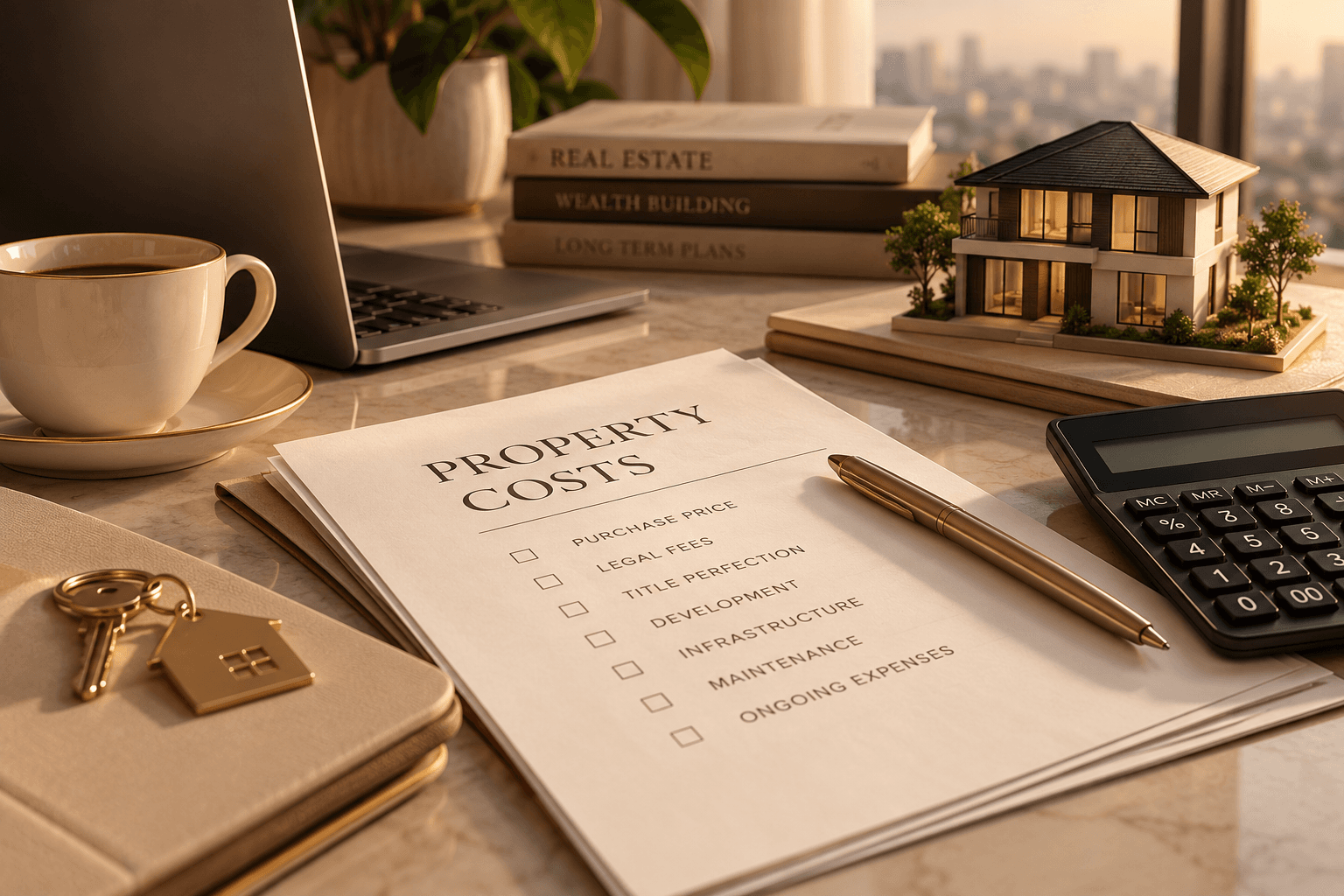
The purchase price is only one part of the total cost. Depending on the property and transaction, you may also need to budget for the following.
1. Documentation and title perfection
Legal fees, registration costs, and other charges may apply. Confirm which costs are payable, who is responsible for them, and when they are due before you commit.
Do not wait until completion to discover that you need additional funds to perfect your title.
2. Development and infrastructure
Land may require site preparation, access roads, drainage, fencing, utilities, and construction before it can serve its intended purpose.
Ask for an estimate of the work required and obtain independent quotes where possible. Then add a contingency for unexpected costs.
3. Maintenance and ongoing expenses
Completed properties may come with service charges, repairs, insurance, security, and other recurring expenses. Rental properties may also remain vacant while costs continue.
Estimate these expenses monthly and annually. If the property is an investment, include them when calculating your expected return.
4. The cost of waiting
If your plan depends on future funding, development, or resale, consider what happens if the next step takes longer than expected.
Can you afford to hold the property for six or twelve months without income from it? Will you need the money for another obligation? Could delays reduce your expected return?
A property can retain its value and still become a financial burden if you cannot afford to move forward.
A practical way to budget
Before making an offer, prepare a simple ownership budget with four figures:
1. Acquisition costs: the purchase price and transaction-related expenses.
2. Readiness costs: what you must spend to make the property usable or developable.
3. Holding costs: maintenance, security, service charges, taxes, financing, and other recurring expenses.
4. Contingency funds: money reserved for delays, price increases, and unexpected repairs.
Then calculate how much cash you will have left after the purchase.
If buying the property leaves you unable to cover emergencies, complete the next stage or manage a reasonable delay, the property may be affordable on paper but unsuitable for you right now.
You can also test the plan against three scenarios:
• What if development costs increase?
• What if funding arrives later than expected?
• What if the property produces no income for several months?
If the plan only works under perfect conditions, it needs more room.
These checks are not reasons to avoid buying property. They are reasons to plan for ownership as carefully as you plan for acquisition.
The objective is not simply to acquire an asset. It is to acquire one you can manage without putting yourself under unnecessary financial pressure.
Rennie's Insight
The amount you need to buy a property and the amount you need to own it successfully are not always the same.
Before you commit, calculate the full cost of ownership, protect your emergency funds, and stress-test your plan against delays and unexpected expenses.
The goal is not to spend everything you have getting into the market. It is to buy a property you can comfortably take to the next stage.
Rennie's Question
When budgeting for a property purchase, do you calculate only the purchase price, or do you plan for the full cost of ownership?