Why The Cheapest Property Is Not Always The Best Deal
Why a lower price tag doesn't mean a better investment. Understanding when a bargain is actually a financial trap.
By Rennie Olajuyin
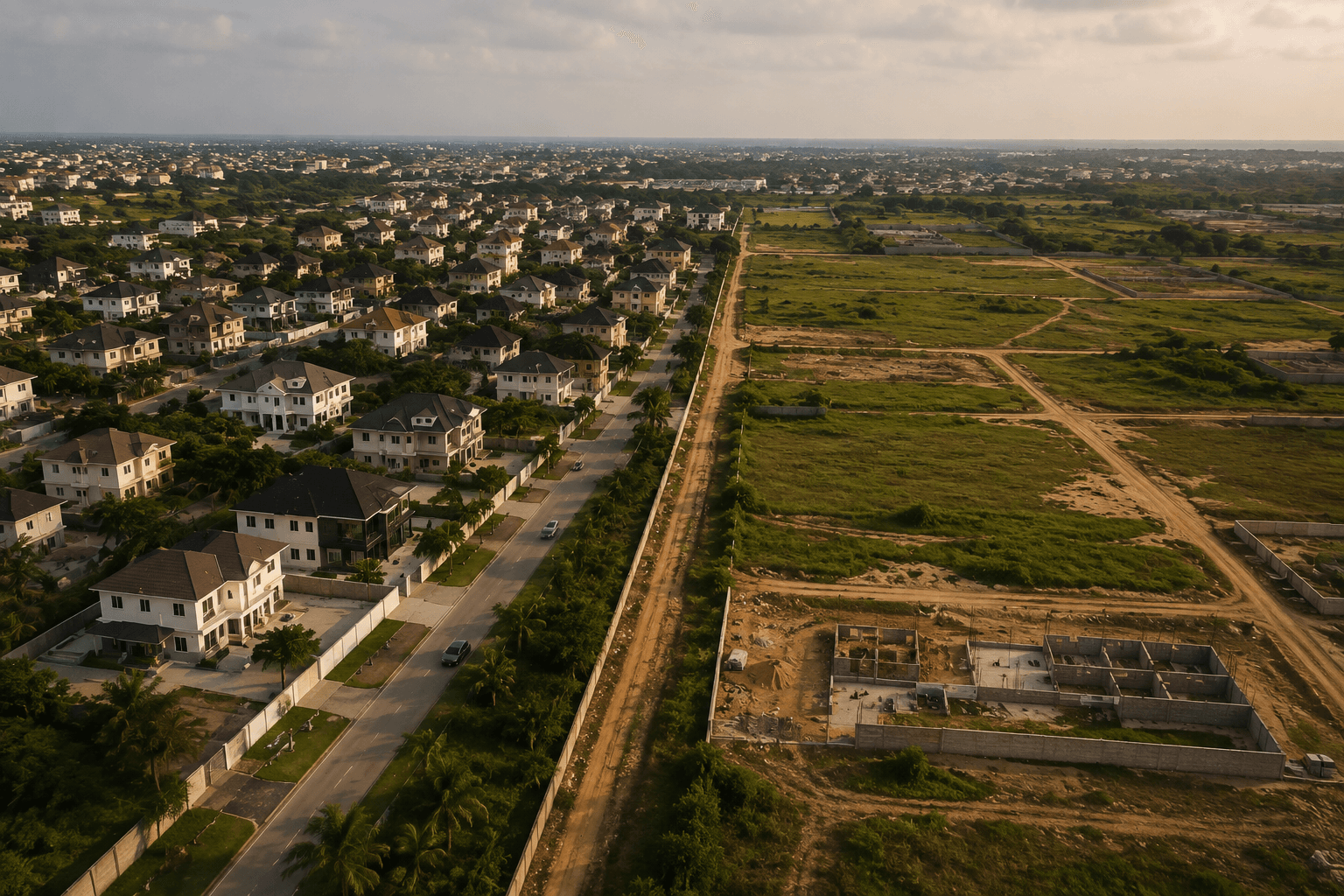
There is just something about a cheap property that naturally catches our attention.
Maybe it’s because bargaining is such a big part of our culture. We always want to pay the lowest price possible for the things we buy.
Think about it. You see a 500sqm piece of land selling for ₦4.5 million in one location and another 500sqm selling for ₦15 million somewhere else, and the first thing that comes to mind is:
“Why would I pay ₦15 million when I can get land for ₦4.5 million?”
It’s natural to look for a good deal. But real estate doesn’t work quite that simply.
In real estate, we often hear that a cheap entry point is the easiest way to make money. But over the years, I’ve learnt that price and value are two very different things.
The price you pay for a property is only one part of the investment. What matters just as much is what that property can actually do for you over time.
A cheaper property can sometimes be the better deal.
And sometimes, it can be the more expensive mistake.
Price Is Not The Same As Value.
A property may be cheap because it:
Is located far from existing development
Has limited accessibility or no motorable roads
Is untitled or burdened with Omo Onile issues
Requires significant additional spending before it becomes usable
On the other hand, a property may cost more because it offers stronger infrastructure, verified documentation, higher demand, or a clearer path to rapid appreciation.
That doesn’t automatically make the expensive property a good investment. But it does mean that comparing properties based on price alone gives you a very incomplete picture.
Ask the Right Questions Before Buying.
The first question shouldn’t always be: “How much is it?”
Sometimes, the better first question is: “What am I getting for this amount?”
If you’re buying land: Look closely at location, title & documentation, accessibility, surrounding development, proposed infrastructure, permitted land use, and actual demand.
If you’re buying a house: Look beyond the building itself. Consider the neighborhood, structural condition, rental yield, service charges, maintenance costs, security, and potential resale value.
The cheapest option may save you money today while costing you millions tomorrow. The real cost of a property is the purchase price PLUS everything you need to spend to make the investment work.
Sometimes, paying more upfront for the right property is actually the most economical decision you can make.
But Expensive Doesn’t Automatically Mean Better Either.
This is just as important: a high price tag is not proof of high value. A property can be overpriced just as easily as it can be underpriced.
You still have to dig deeper and ask:
Why is it at this price point?
What is driving the perceived value?
What is happening in the surrounding market?
Who is likely to want this property in the future?
Does this property align with what I am trying to achieve?
Because the “best” property isn’t necessarily the most expensive one, it’s the one that makes sense for your goal, your budget, and your timeline.
So, What Actually Makes a Good Deal?
In my opinion, a good deal is not simply a property that is cheap. It is a property where the price makes sense relative to the value and potential you are getting.
Sometimes, that will be an affordable piece of land in an emerging location.
Sometimes, it will be a higher-priced property in an already established hub.
Sometimes, it will be an opportunity with a very defined exit strategy.
And sometimes, the best decision is to wait until you find something that actually aligns.
Real estate is not a competition to see who can buy the cheapest property or who can buy the fastest. It is a long-term decision.
And when you’re putting a significant amount of money into an asset, “cheap” should never be the only reason you buy.
Because sometimes, yes, the cheapest property is the best deal. And sometimes, the best deal is the property you were willing to pay a little more for because you truly understood what you were buying.
Rennie’s Insight.
The thrill of a low price lasts for a moment, but the cost of a poor investment can last for years.
A true bargain in real estate isn’t necessarily the property that costs the least today. It’s the property that offers the strongest combination of value, usability, and potential for your particular goal.
Don’t let a low price tag blind you to the real cost of ownership.
Rennie’s Question.
Have you ever been tempted by a “cheap” real estate deal that turned out to have hidden catches?
If you’re looking to buy right now, are you focusing purely on the lowest price tag, or are you looking at the bigger picture of overall value?